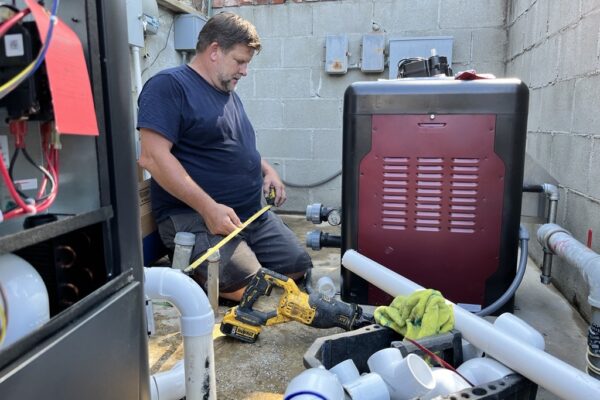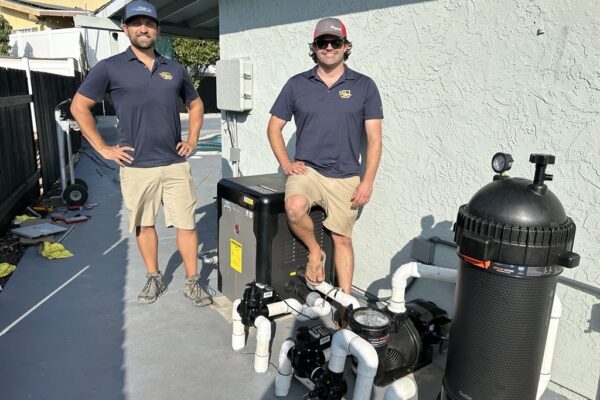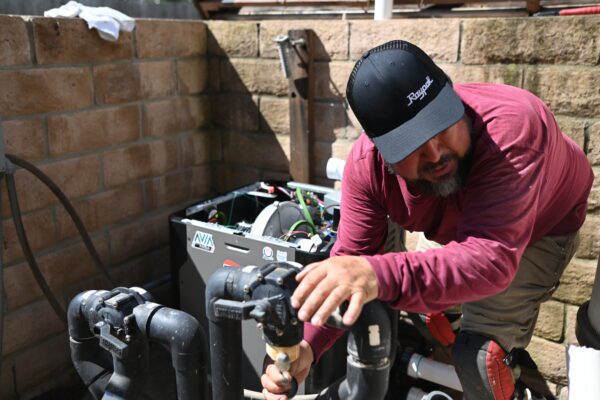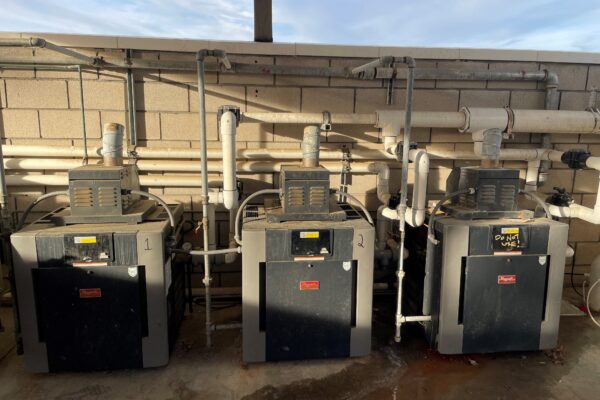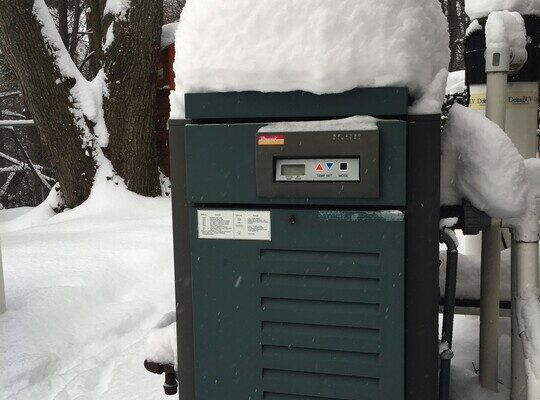
Replacing a gas‑fired pool heater sounds simple on the surface. The old unit comes out, a new one goes in, and you are back to warm water. Many people assume that choosing the same size heater or even staying within the same model line, guarantees a smooth swap. In practice, the new heater will often line up well with the existing plumbing and gas connection. However, “like for like” does not always mean that every detail carries over unchanged. Differences in design, efficiency standards, and current code requirements can introduce complications if they are not accounted for.
Before installing a new heater, it is worth stepping back and confirming that the existing setup can fully support it. A careful review of gas supply, electrical connections, combustion air, and water flow can help prevent performance issues, nuisance shutdowns, or potential safety hazards.
Gas Pipe Sizing Matters More Than You Think
One of the most common issues in heater replacement is undersized gas piping. Older heaters were often less efficient and had lower input ratings than newer models. Even if the BTU rating looks similar, modern heaters can have different gas pressure requirements or demand higher flow during operation.
If the gas line is too small or too long for the new heater’s requirements, the unit may struggle to ignite, cycle on and off, or fail prematurely. It’s not enough to assume the existing pipe is adequate. The installer should verify pipe diameter, total run length, number of fittings, and available gas pressure at the meter. In some cases, upsizing the gas line or regulator is necessary to meet the manufacturer’s specifications.
Electrical Requirements Can Change
Pool heaters today often include more advanced controls, digital displays, and safety systems. That can mean different electrical needs compared to older units. While many gas heaters still operate on standard voltage, the amperage draw, grounding requirements, or bonding connections may differ.
It’s important to confirm that the existing electrical supply matches the new heater’s requirements. This includes checking breaker size, wire gauge, and proper bonding to the pool system. Missing or improper bonding is not just a code issue; it’s a safety concern.
Combustion Air Is Not Optional
Gas heaters need a steady supply of fresh air for proper combustion. Older installations sometimes worked under less strict code enforcement or with equipment that tolerated marginal airflow. Newer heaters are less forgiving.
If the heater is installed in an enclosed or partially enclosed space, such as a shed or equipment room, the available combustion air must be verified. Inadequate airflow can lead to poor combustion, soot buildup, and dangerous exhaust conditions. Modern codes often require specific vent openings or ducted air supply based on the heater’s input rating.
Even outdoor installations can run into issues if the heater is placed too close to walls, fences, or other obstructions. Clearance requirements are there for a reason and should be double-checked during replacement.
Water Flow Has to Match the Heater
A pool heater depends on proper water flow to operate safely and efficiently. Too little flow can cause overheating and trigger safety shutoffs. Too much flow can reduce heating efficiency or create internal stress on components.
When replacing a heater, it’s important to confirm that the existing pump and plumbing system deliver flow rates within the new unit’s specified range. This includes checking pipe sizes, valve positions, and any recent changes to the pool system, such as added water features or upgraded pumps.
Variable-speed pumps, now common in most pools, add another layer to consider. The heater must be compatible with lower flow settings, or the system may need adjustment to ensure consistent operation. Raypak recommends adding a bypass at the heater to dial-in water flow without reducing overall system flow rate (read our article “The Long Lost Art of Bypass Valves” for more information)
Venting and Exhaust Are Not Always Interchangeable
For indoor or sheltered installations, venting is another area where “like for like” can be misleading. New heaters may have different flue sizes, materials, or venting configurations. Using an old vent system without verification can lead to improper draft or condensation issues.
The venting system should be evaluated against the new heater’s requirements, including diameter, length, and approved materials. In some cases, a full vent replacement is the safest and most compliant option.
Codes and Standards Evolve
Building codes and manufacturer guidelines change over time. What was acceptable when the original heater was installed may no longer meet current standards. This can affect everything from clearances and gas connections to bonding and emissions.
A proper replacement should take current codes into account, not just replicate the previous installation. This may add some upfront cost, but it ensures the system is safe, efficient, and less likely to run into issues during inspection or operation.
A good example is the gas line sediment trap and shut-off valve. These are often omitted during installation, but National Fuel Gas Code requires them. Replacement is the perfect time to bring that line up to code.
The Bottom Line
Replacing a gas pool heater is not just a swap. It’s an opportunity to confirm that every supporting system is up to the task. Gas supply, electrical connections, airflow, water circulation, and venting all need to be checked against the new unit’s requirements.
Taking the time to verify these details upfront can prevent headaches later. A heater that’s properly matched to its environment will run more efficiently, last longer, and deliver the consistent performance pool owners expect.
In the end, “like for like” is a starting point, not a guarantee. A careful, informed approach turns a routine replacement into a reliable upgrade.